
The AI tools that actually earn their keep in an implant practice: meeting notes, Messenger auto-replies, ad comment moderation, and the automations that connect them, with the compliance line drawn clearly.
An implant practice loses more cases to silence than to competitors. There is the Facebook comment asking "how much is this?" that nobody answered for two days. There is the Messenger inquiry at 9pm that got a reply at 10am. There is the consultation where the coordinator was so busy taking notes that she missed the moment the patient said "my husband thinks it's too much." Each of those is a $25,000 case walking out through a gap in attention, and no amount of ad spend fills that gap.
AI tools are good at exactly those gaps. They do not replace the coordinator who closes the case or the surgeon the patient trusts. What they do is catch the comment at 2am, write the follow-up while the coordinator is on another call, and make sure that what the patient said in the consult is in front of the team the next morning. The practices getting the most from AI are not the ones using the most tools. They are the ones who put a tool on each specific gap and left the human conversation alone.
This guide covers the four places AI pays for itself in implant practice marketing, the tools that work for each, and the compliance line a healthcare practice has to hold.
Where does AI actually help an implant practice's marketing?
It helps in four places: capturing what was said in consultations and calls, replying instantly to patients on Messenger and Instagram, moderating and answering comments on ads and the practice page, and connecting those systems so a lead moves from an ad to the schedule without a human copying it. Everywhere else, including the clinical conversation and the close, the human still wins.
What AI should not do is just as important. It should not diagnose, quote a final price without a human, or hold the conversation where a patient decides to spend $30,000. A bot that tells someone it has never seen that they "look like a great candidate" is a liability, and patients can tell when they are talking to one. The right use of AI is to get the human into the conversation faster, not to keep the human out of it.
How can AI meeting notes improve implant case acceptance?
Tools like Fireflies, Otter, and Fathom join a video call or record an in-person meeting, transcribe it, and produce a summary with action items. For an implant practice, recording virtual consultations and team meetings turns what was said into something the coordinator can act on, and it builds a library of real patient language for marketing.
A full-arch consultation is forty-five minutes of information, objections, and emotional cues, and a coordinator who is writing notes misses half of it. With a recorder running on a virtual consult, and with the patient's consent stated at the start, the coordinator can be fully present. The summary afterward captures the exact objection, the spouse's concern, the timeline the patient mentioned, and the financing question, which is what the follow-up should be built on. The post-consult follow-up sequence works much better when it references what the patient actually said.
The marketing payoff is just as real. Patients describe their situation in words no agency would write: "I stopped eating at restaurants," or "I haven't smiled in a photo in six years." A transcript library from consented consults is the best source of ad copy, landing page headlines, and video scripts an implant practice will ever have, because the headlines that work in implant ads are the ones that name the patient's situation, and that language comes from the patients. Recording the Monday case review and the marketing meeting helps the team too, since the summary and action items reach everyone, including the surgeon who was in a procedure.
The compliance line
A consult recording is protected health information, so the recorder has to come from a vendor that will sign a Business Associate Agreement. Fireflies offers HIPAA compliance on its higher-tier plans, as do some competitors, and the practice should confirm the BAA in writing before recording a single patient. Get verbal consent at the start of each recorded consult, store the recordings inside the compliant platform rather than exporting them to email, and treat the transcript like a chart note.
How can AI auto-reply to patients on Messenger and Instagram?
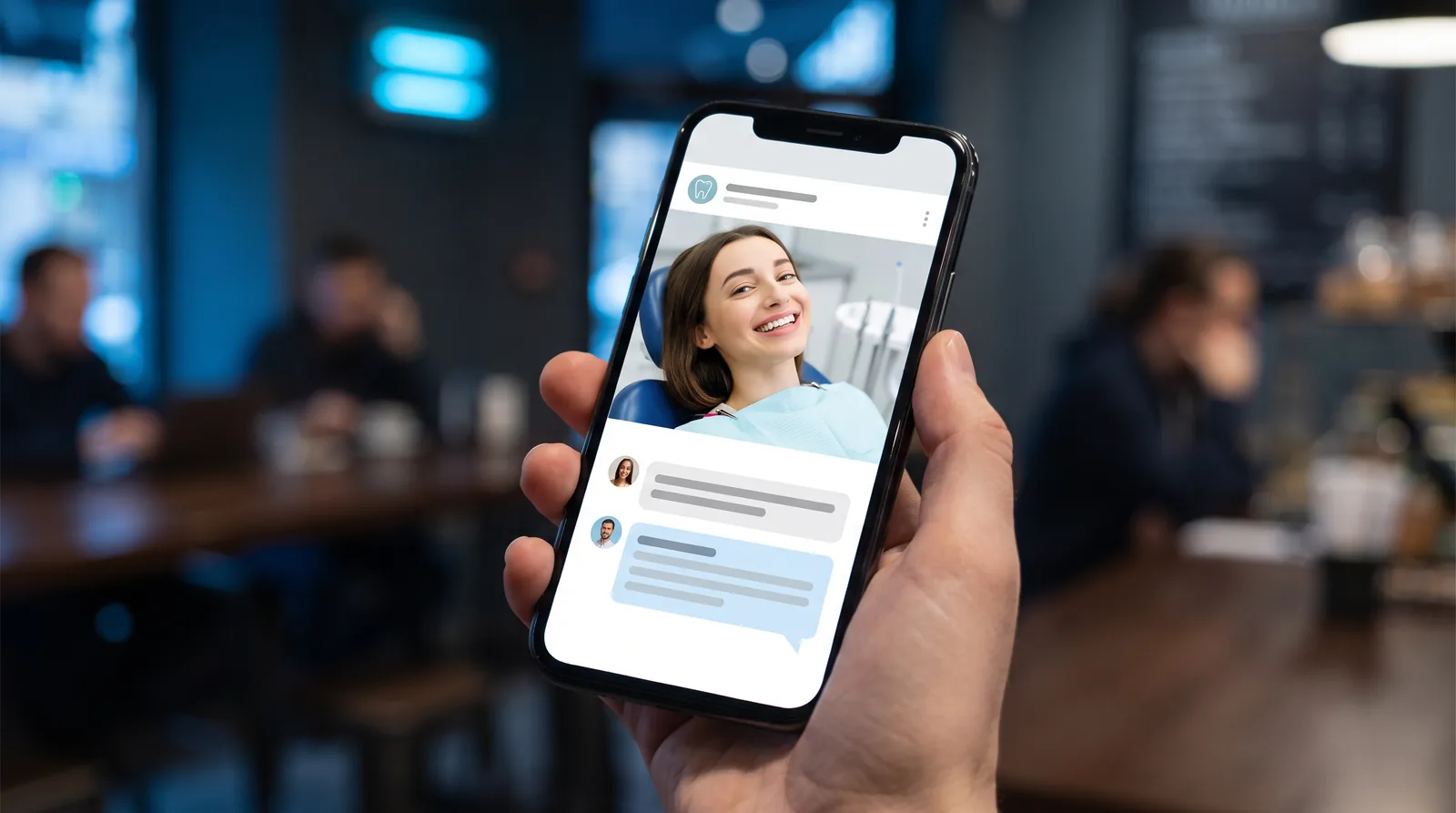
Platforms like Manychat, Chatfuel, and Meta's own automated responses can greet a patient the second they message the practice, ask the qualifying questions, answer the common ones, and hand the thread to a human the moment a real person is needed. The goal is a reply within seconds at any hour, followed by a coordinator within minutes during office hours.
A good automation does a few specific things, in order:
- Replies within a few seconds with a named greeting
- Asks two or three questions: how many teeth are missing or failing, how soon the patient hopes to have treatment, and whether they want to hear about financing
- Answers the questions that have standard answers, such as a price range for All-on-4, how long a consult takes, and whether the practice offers sedation, with the same answer a human would give
- Says a named coordinator will reply shortly and, if the practice uses one, offers a booking link
What it should not do is pretend to be a person or try to carry the conversation past the handoff. Patients over 60, the core implant demographic, are quick to disengage from a bot that keeps going. Three exchanges, then a human.
Comment-to-DM
Manychat and similar tools can watch for a comment on an ad or post containing a keyword like "price" or "info," then automatically send the commenter a direct message with the answer and an invitation to continue. That turns a public comment, which the practice should never answer with pricing details in public, into a private conversation. It is one of the highest-return automations an implant practice can run on Meta, and it pairs with the lead strategies in getting more patients from Meta ads.
The compliance line
Meta and most chat platforms do not sign a BAA, so the automation must not collect or store medical history, and the practice should move the conversation to a phone call or a secure channel once it turns clinical. Keep the bot to scheduling and general information.
How can AI manage comments on Facebook ads and the practice page?
Dedicated comment-moderation tools read every comment on an ad or page post, classify it as a question, a compliment, spam, a complaint, or a competitor, and then either reply, hide, or flag it for a human. For an implant practice running ads to thousands of people, this is the difference between an ad whose comments are full of unanswered questions and hostile remarks and one whose comments read like a conversation.
That matters because patients read the comments before they tap the ad. An ad with "How much???" and "Scam" sitting unanswered beneath it converts worse than the same ad with "Great question, Linda, we've sent you a message with our price range" in the same spot. The comments are part of the creative.
Several products handle this well:
- Reply200 positions itself as a moderation-first alternative to Manychat, starting around $29 a month for a few thousand comments, and classifies each comment's intent before acting
- RYPL is built specifically for Facebook ad comment management, with plans from about $19 to $89 a month
- For a practice already using Zapier or Pabbly Connect, a "new comment on ad" trigger can pass each comment to an AI model to draft a reply for a human to approve
Pricing changes often, so check current figures before committing. Whichever tool you use, the rules should be the same. Reply publicly to questions with a short, warm answer that moves the person to a private channel ("Thanks for asking, we've sent you a message"). Hide spam and abusive comments. Flag any comment that mentions a bad experience for a human to answer personally, never with a template. And never post a price, a diagnosis, or any patient's information in a public reply.
How do Zapier and HIPAA-compliant automations connect it all?
Automation platforms move data between tools without a person copying it. A Meta lead becomes a CRM contact and a text message; a booked consult triggers a reminder sequence; a missed call creates a task. Zapier is the best-known platform for this, and for an implant practice the deciding question is whether the automation touches protected health information, because that determines which platform you can use.
The automations worth building first are the ones that remove a copy-and-wait step:
- A new Meta or website lead creates a contact in the CRM or practice management system and sends the patient a text within one minute from a named coordinator
- A new lead with "most of my teeth" or "all of my teeth" in the qualifying answer alerts the coordinator's phone directly
- A consult booked in the schedule starts a confirmation and reminder sequence
- A consult that ends without a signed treatment plan starts the follow-up sequence
- A recorded call from the call tracking platform that lasted under a minute creates a callback task
Zapier connects thousands of apps and is the fastest way to build most of these. It offers HIPAA compliance with a BAA on its enterprise tier, so a practice should confirm its plan covers that before routing anything containing patient details through it. On lower tiers, it should carry only non-health data, such as a name and phone number with a scheduling request. For automations that touch practice management systems like Open Dental, treatment plan data, or anything clinical, a platform built for healthcare with a BAA on every plan is the safer choice, and how Keragon automations help implant practices covers that path in detail.
Whichever platform you choose, keep a human in the loop wherever money is discussed. Automate the acknowledgment, the reminder, and the handoff, but not the price conversation or the close. The sequence exists to get the coordinator onto the phone faster, and the treatment coordinator should always be the one who quotes the number.
What should an implant practice set up first?
Start with the gap that is losing the most cases, which for most practices is response time to inbound inquiries. Then add meeting notes for consults, then comment moderation, then the deeper automations.
- Turn on an automated first reply for Messenger and Instagram with two qualifying questions and a named handoff, and set a 15-minute response standard for the coordinator during office hours.
- Connect every lead source to a single place the coordinator watches, with an automatic text acknowledgment, using a platform that fits the compliance needs of the data it carries.
- Add a comment moderation tool to every active ad and the practice page, with public replies that move questions to private channels and a human flag for complaints.
- Start recording virtual consults and team meetings with a BAA-covered tool, with consent, and build a folder of patient language for marketing.
- Review once a month which automations produced booked consults and which produced noise, and turn the noise off.
The Bottom Line
AI earns its place in an implant practice by closing the gaps where cases go quiet: the unanswered comment, the overnight message, the consult detail nobody wrote down, and the lead that sat in an inbox. Put a tool on each gap, keep every automation short of the clinical and financial conversation, and route anything that touches health information through a vendor that signs a BAA. The human coordinator still closes the case; the AI just makes sure she gets there in time. And when a patient leaves Facebook to compare providers, be on the page they compare on by listing your practice on Dental Implant Directory.
Get found by implant patients
Join the directory and start receiving qualified inquiries in your area. Plans start at $19.99/month.
Explore Listing Plans